11.10.2014
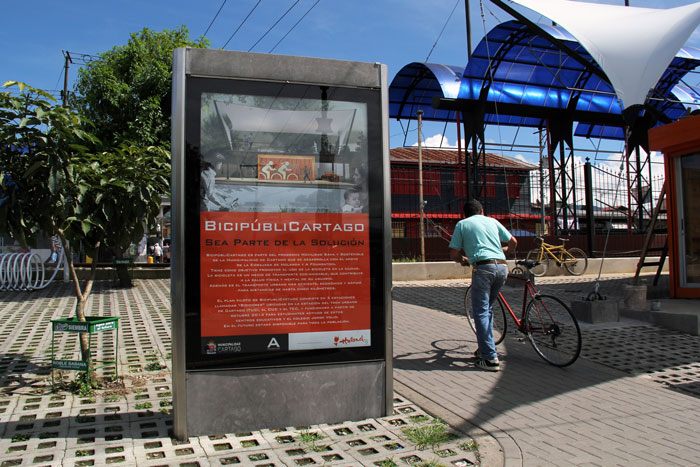
Last week, we finished the construction of Costa Rica's first urban bike rental system in the city of Cartago; it is called BicipúbliCartago and is the first of its kind in Central America. The project will be launched on the 15th of October.
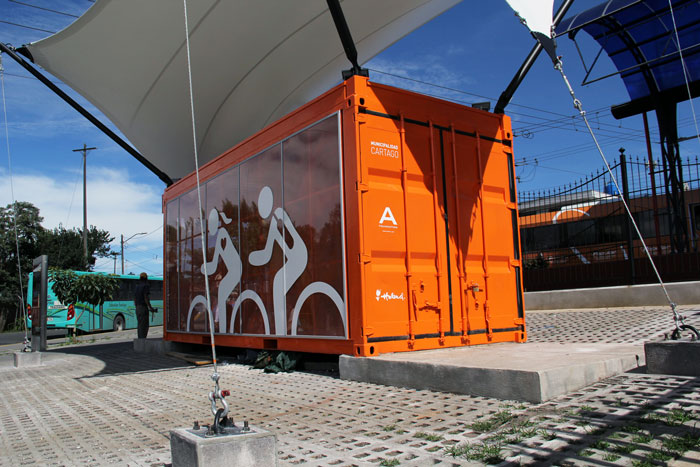
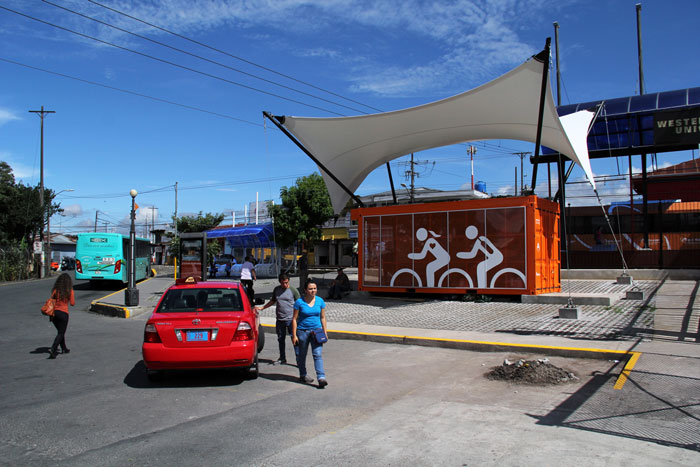
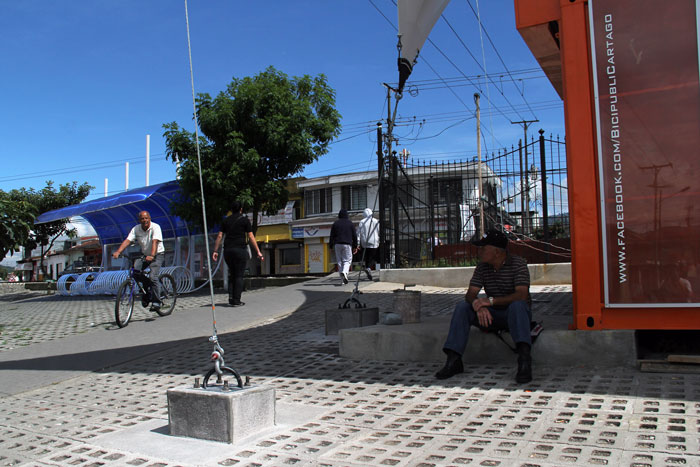
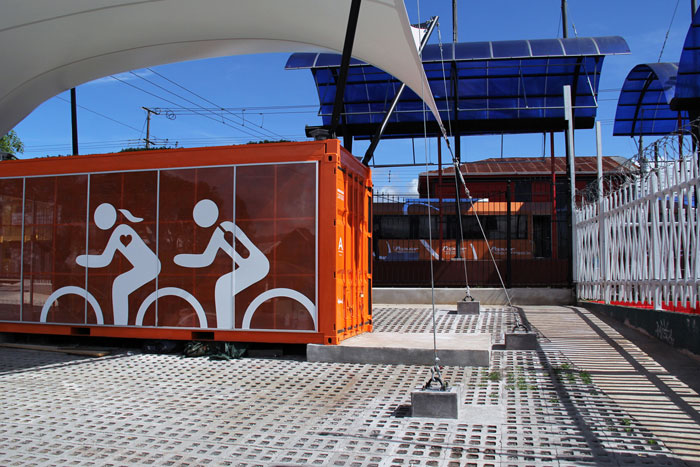
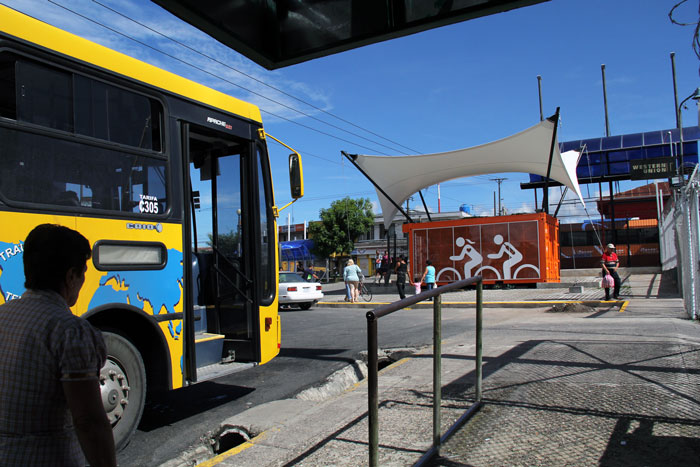
The bike stations of BicipúbliCartago are designed by A Foundation, reutilizing 20 foot shipping containers to function as service stations in daytime and bike storage at night. The stations are surrounded by an integrated design of urban plazas and parks, they are covered by green roofs and tensile structures to protect from the local tropical climate. The site-specific configurations of the different stations are based on a design toolbox, which allowed us to optimize and associate each location according to the specific urban design parameters.
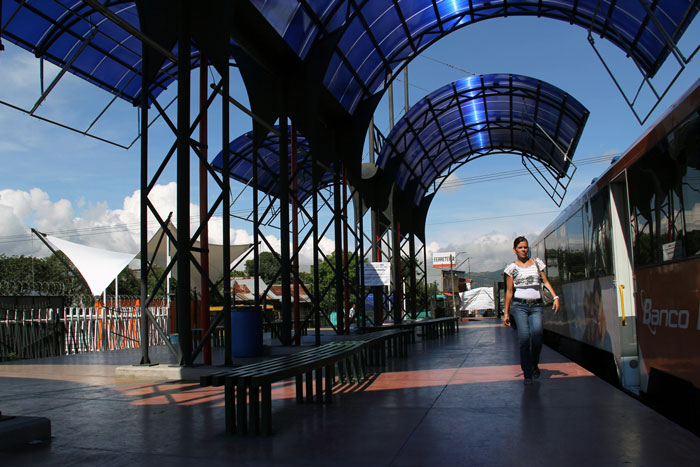
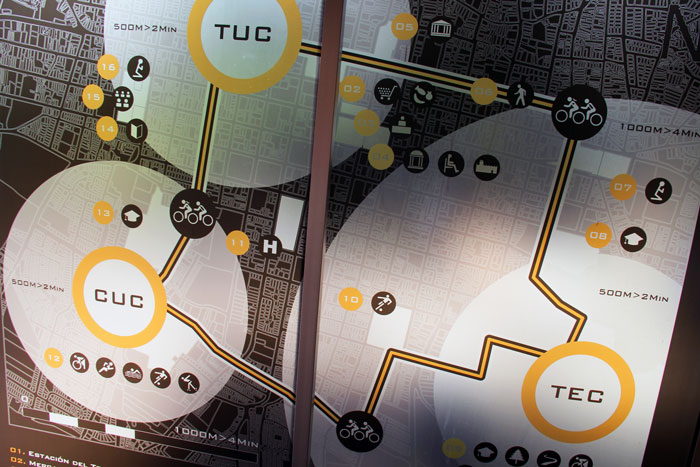
The strategic placement of the bike stations throughout the city connects the inter-urban train station with different points of interest in Cartago. At the train station, the project will generate Costa Rica's first intermodal transport hub connecting motorized with non-motorized urban transport. The inter-urban train connects the city of Cartago to the other major cities of Costa Rica's Greater Metropolitan Area (GAM), completing an important part of our integral public transport concept to restructure the GAM as an efficient polycentric network system dotted by multifunctional urban cores.
The bikes of BicipúbliCartago were designed by A Foundation in collaboration with GW from Colombia, they will be used on the GAM's first inner-urban bicycle path. The overall project was developed by the Municipality of Cartago in close collaboration with the Dutch Embassy in Costa Rica and A Foundation.
Besides the construction of the BicipúbliCartago project, A Foundation implemented the Sustainable Mobility campaign in order to promote the use of the bicycle as a means of non-motorized urban transport in Costa Rica. The campaign includes, amongst others, a cross-border dialogue about sustainable urban transport, educational workshops and cycling manifestations; it is supported by local citizen initiatives as well as prominent cycling activists.